
As faith-based organisations, the impact of our mission often works in the realm of the unseen: hearts changed, lives transformed in small ways and big, quiet change. We deal in the intangible and transformative: faith, mental health, connection, and purpose. Unlike other organisations, where impact can be measured by very clear and practical Key Performance Indicators, our impact can be harder to quantify but no less vital. We require a new way to measure, because the change we bring is often felt before it is counted.
Unlike services where success is measured by tasks completed — like surgeries performed or cars repaired — our mission works in the realm of holistic, human-centred outcomes. We deal in the intangible and transformative: faith, mental health, connection, and purpose. These are harder to quantify but no less vital. They require new ways to measure, because the change we bring is often felt before it is counted.
Express Your Interest To Be A Part of The Impact Index For Your Ministry
Express Your Interest To Be A Part of The Impact Index For Your Ministry
How The Impact Index Works
Many organisations create change that isn’t easily measured by traditional metrics. The Impact Index is designed for mission-driven teams — especially those working in faith, wellbeing, connection, and purpose — who need a way to show that what they do is working, even when the outcomes are complex, personal, or intangible.
Whether it’s a media ministry helping people experience hope, or a wellness organisation fostering emotional resilience, the Impact Index helps make the invisible outcomes visible — with a framework grounded in holistic, human-centred transformation.
The Impact Index considers holistic psychometric wellbeing measures surrounding three key circles of health that intersect or overlap in a Venn diagram of life: Personal Health, Community Health, and Spiritual Health.
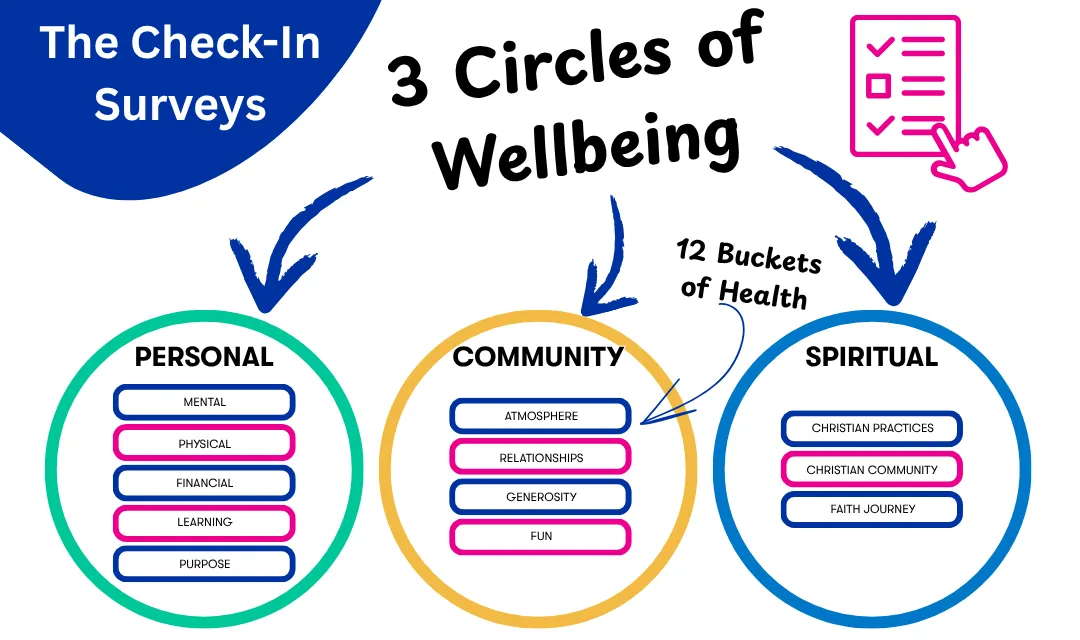
Those three circles of health each include buckets of relevant inputs that inter-relate to give us a sense of our overall health and wellbeing, recognising that one week we might be thriving in one area and struggling in another — and that might switch the next week.

These buckets create data points that can be measured
A psychometric self-assessment method using contentment, sense, feeling measures:
Inner and mental health: feelings of calm, peace, happiness, energy, stress, and anxiety, as well as overall mental and emotional health.
Our sense of physical, financial, intellectual, spiritual health, purpose, generosity, belonging, relational and recreational health.
A self-reporting measure of habits and actions specifically in the area of Christian Spirituality.
How often one is connecting to and actively involved with a faith community.
How often one is reading the bible, praying, worshipping God, journaling spiritual thoughts.
A self-reporting measure of Growth and Change
Including a self-reporting attribution to the organisation's impact on their score
A historical measure of growth and change based on multiple participation in the Check-In surveys over time.
These buckets create data points to measure
A psychometric self-assessment method using contentment, sense, feeling measures:
inner and mental health, feelings of calm, peace, happiness, energy, stress and anxiety, and an overall mental and emotional health.
Our sense of physical, financial, intellectual health, spiritual health, purpose, generosity, belonging, relational and recreational health.
A self-reporting measure of habits and actions specifically in the area of Christian Spirituality.
How often one is connecting to and actively involved with a faith community.
How often one is reading the bible, praying, worshipping God, journaling spiritual thoughts.
A self-reporting measure of Growth and Change
Including a self-reporting attribution to the organisations impact on their score
A historical measure of growth and change based on multiple participation in the Check-In surveys over time.
Age
Geographic regions
Gender
Employment status
Faith attributions
Media consumption
Relationship Status
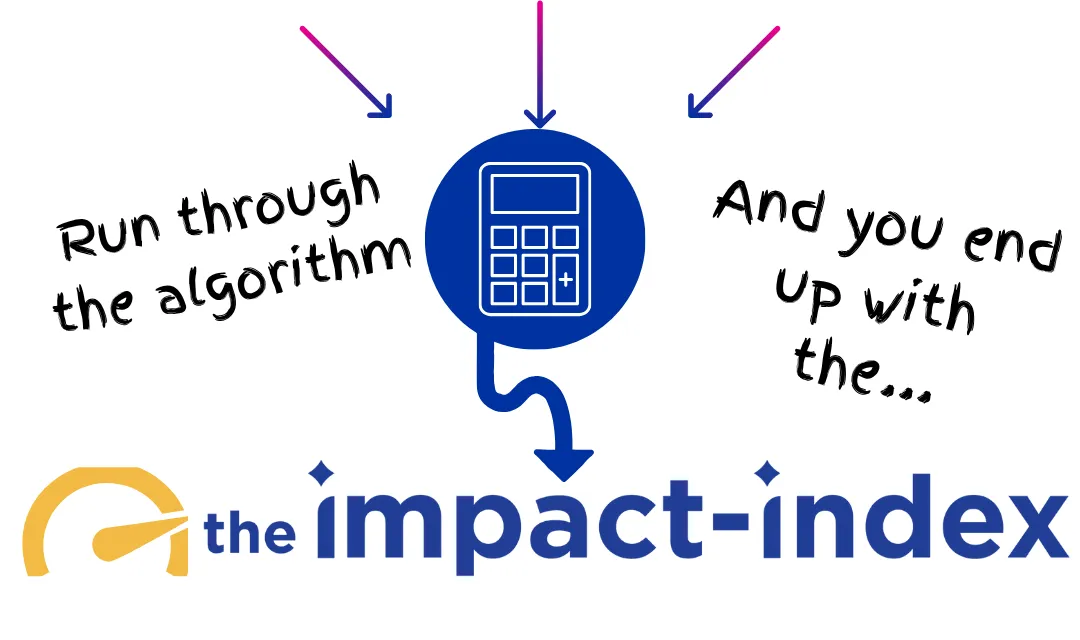
The algorithm and score considers defining a benchmark or ‘normal’ which can change in seasons and over time with unrelated factors such as financial climates, wars, weather etc.
The benchmarking to determine a “Base” score considers many confounding factors including:
Age
Geographic regions
Gender
Employment status
Faith attributions
Media consumption
Relationship Status
Your “Core” score is based off of your participants in and is broken into three groupings
Deeper: Those engaged deeply with practical and tangible support to help in key and specific areas of struggle in their life. The “Base” for this group is by default going to be different on Bucket and Circle measurements due to the fact that they are engaged with deeper and practical support. This requires a before and after measure where “Before” is the base and “After” is the “Core” score.
Connected: Those with multiple interaction points with an organisation that demonstrates a relational connection. This group can be tracked over time to measure increases and decreases and compares to the general “Base” with an added input of improvement over time.
Always: All participants.
The Impact Index exists to help organisations working in intangible, transformational, or faith-driven missions measure what traditional metrics often overlook: personal, emotional, spiritual, and relational change.
The Impact Index exists to help organisations working in intangible, transformational, or faith-driven missions measure what traditional metrics often overlook: personal, emotional, spiritual, and relational change.
Apply now before all spots are gone!
Copyrights 2025 | Positive Media Ltd | Terms & Conditions